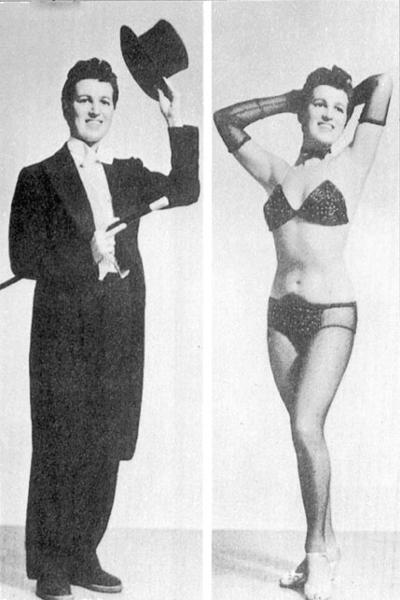
(Portrait of a Young Butch: Merril Mushroom in the 1960's)
By Dylan Foley
Merril Mushroom was born in 1941 in Miami Beach, Florida. As a young gay woman, she was lucky to be raised in a city with a vibrant gay and lesbian bar scene. When she was a baby butch in high school, she and two lesbian friends did a one-time male drag performance at the Onyx Room as the Tongueston Trio, doing a lip-sync rendition of “Bad Boy” by the Jive Bombers. That night, the girl Merril adored bought her drinks.

When she went to the University of Florida in Gainesville in the late 1950’s, Florida was in the grips of the McCarthyite anti-gay Johns Commission, where both professors and college students believed to be gay were interrogated and hounded. Some professors committed suicide. Gay men and lesbians were routinely arrested at gay bars and at gay beaches.
Merril herself was questioned by authorities as a possible lesbian, dodging questions and not naming names. She changed schools to the private University of Miami, to avoid further harassment. Merril married a gay friend Jack, who was a federal civil servant. They moved to Alabama for his job during the height of the Freedom Rides, then to New York City.
Merril started living with a lover in Greenwich Village and patronizing bars like the Sea Colony and Page Three. She taught school at a Harlem elementary school for five years, then worked in progressive special-education programs.
In the mid-1960’s, Merril and another gay friend John started doing LSD together. John said he wanted to marry her, so she divorced Jack and married John in a 1960’s hippie ceremony on a friend’s property in New Jersey. The resulting film by Francis Lee from the event was narrated by the LSD guru Ram Dass. The couple decided they were going to raise children together.
Merril and John set up a hippie crafts store called Paranoia that was a free food kitchen and de facto community center for teen hippie runaways in the East Village. They also set up a gay hippie psychedelic collective. Researchers for the Neuropsychiatric Institute in Princeton would come interview them about their LSD trips.
In 1972, Merril and John decided that New York was getting too violent. They adopted their first son Jaime and hit the road in a tricked-out school bus with parquet floors, crushed-velvet curtains and a chemical toilet, looking for an intentional community that would be hospitable to their family. New Mexico was cold in the winter, so they went to the South and eventually settled in rural Tennessee, where they bought a one-hundred acre farm. Merril and Gabby (John’s fairy name) landed in what would eventually become one of the gayest areas in the South. It is now home to several dozen gay and lesbian intentional communities.
Finding decent-paying work in a rural area was hard. Merril did heavy construction, but eventually wound up teaching in the local school system as a special-education teacher for 23 years.
All the while, Merril was active in the Southern Lesbian Writers Association Conference. In 1982, she wrote the article “How to Engage in Courting Rituals 1950′s Butch Style in the Bar,” a comic take on the often strict social codes for butch-femme dating in the New York bars. Soon after, she wrote the play “Bar Dykes,” set in an unnamed 1950’s New York bar, with a wide spectrum of lesbians drinking, cruising, flirting, dating and breaking up.
In 1984, the venerable gay playwright, director and Caffe Cino veteran Bob Patrick produced “Bar Dykes” in Los Angeles. The play was also produced in Florida in 1992.
In Tennessee, Merril could not afford magazine subscriptions, but realized that if she wrote for journals, they’d give her free copies. Over 45 years, she has had 100 publications in journals like Common Lives, Lesbian Lives and Sinister Wisdom. Recently, she guest edited a six-part series in Sinister Wisdom on a history of Southern lesbian life and culture.
Disaster struck in 2015, when the house she and Gabby built burnt down, destroying her literary archive and such things as her lesbian activism t-shirt collection. Friends rallied around Merril, sending her books and copies of her published articles that Merril had given them, helping to rebuild her archive.
After the fire, a copy of “Bar Dykes” was located. The artist Faythe Levine and Caroline Paquita, who runs the Pegacorn Press in Brooklyn, NY, republished the play in a gorgeous edition. The play was then performed in 2019 at the Flea Theatre in New York City to rave reviews. Merril has never seen the play performed live.

I spoke with Merril by telephone on August 25, 2020, about a life that contained enough adventures for three lifetimes. She lives in rural middle Tennessee in a brick house, and Gabby and three of their five children live across the driveway in another home. Merril was warm and open, discussing the Florida’s anti-gay Lavender Scare, the lesbian bars of 1960’s New York, her Lower East Side psychedelic gay collective and settling in rural Tennessee with her new family. We also talked about the longtail of “Bar Dykes,” and how it can still captivate an audience after 38 years.
DYLAN FOLEY: I just read your essay “The True Tale of the Tongueston Trio” in the anthology Our Happy Hours. You did your teenage baby dyke performance at the Onyx Room, where you and two friends performed the song “Bad Boy” in male drag.
MERRIL MUSHROOM: Yeah, I had a DA and a waterfall hairdo.
I was hanging out in the bars in Florida then. They were all Mob bars. There was Billy Lee’s. We also went to the Red Carpet, the Left Bank, the Rendezvous and the Cas-Bar. Martha Ray was a comedian and singer. Charles Pierce was an actor. He did female impersonation. He did a lot of other theater and worked in partnership with Rio Dante at the Onyx Room in Florida.
There was Jackie Jackson, who had worked the Jewel Box Review. We had the Red Carpet. There was all these big show, gay show people in Miami Beach in the 1950’s, probably from the 1940’s to the 1960’s. They probably all died of old age.
DF: I read your essay about the Johns Committee.
MM: Charlie Johns. I got out, I left the University of Florida. I went to the University of Miami, where it was safe. It was a very dangerous time because it was against the law to be gay. The police would raid the gay beach that we had. They’d raid the bars and drag people in. The butches and the drag queens had the most difficulty. Not good. [Editor’s note: see Merril’s online essay on the John’s Committee and Florida’s 1950’s harassment of lesbians and gays, “The Gay Kids and the Johns Committee,” on olderqueervoices.com]
DF: Did you marry your gay friend Jack for safety?
MM: Well, kind of. It was safety, it was for family and for his job. My family knew I was gay. His family did not. He worked for the government and needed a front. People were doing that all the time in Florida. People married for appearance or for citizenship. There were a lot of guys from Cuba who needed a wife.
We stayed a year in Alabama. It was a very interesting period of time. It was when the Freedom Riders were coming through. I was working with a group of Jewish women who were trying to integrate the library. It was pretty touchy. We saw the bus come through Gadsden on its way to Anniston, Alabama. It got turned over and set on fire.
DF: When you came to New York, you taught in Harlem?
MM: I did my best to be a good teacher and my social life was separate from my professional life. I had to be very closeted as a teacher or I’d be fired. After five or six years, I substituted for a year and that was where I became very interested in special education. I went back to graduate school at Bank Street College and I got a degree and teaching job with kids with autism at one of the most wonderful programs I ever worked at in my whole life. It was amazing, a marriage between the New York City public school system and the Association of Mentally Ill Children, which was a private organization that worked with kids with autism and what they called childhood schizophrenia at the time. It was a wonderful job, the class size was small. We had music therapy, art therapists and dance therapists. I had four students who were adolescent and pre-adolescent boys. We were in the Boys Club of New York facility on 10th Street there. There were two other classes and they were both taught by gay guys.
DF: You had a pretty active social life?
MM: When I started seeing the woman I was seeing, it was pretty quick after I got to New York. She had a sublet on Jane Street, which was right in back of the Sea Colony. She then got a sublet on Jones Street. That’s where I discovered the Caffé Cino, which was wonderful.
Do you know [the playwright] Bob Patrick? He’s in California. We lived in the same building on First Avenue, between 9th and 10th Streets. Bill Hayslip lived there. He and others died pretty early in the AIDS epidemic.
DF: Could you describe the Sea Colony?
MM: It was terrific. Vinny was at the door, the Mafia bouncer. He took really good care of us. It was small. It was very smoky, because you could smoke inside. The dance room in the back was packed with women. There was a bar in front. The best part of the bars in New York was that they didn’t raid them and take people out of them. The first time I went to a gay bar in New York, the police came and cleared the bar. Nobody got arrested. I was like, “Wow.”

I remember when they started the rationing out the toilet paper. Women were going in together before that and doing things.
I hung out at the Sea Colony and the Washington Square, a downtown, little slummier bar. I went to Kooky’s for an uptown snottier bar. The woman who ran it was some gangster’s girlfriend.
DF: Kooky, with the big beehive?
MM: Yes!
DF: Did you read Karla Jay’s memoir The Lavender Menace? She writes some funny things about Kooky’s.
MM: I used to have a Lavender Menace t-shirt, then my house burned down five years ago. Everything burned up, including my t-shirt collection, records, books, artwork. It all turned out well in the long run and things worked out as beautifully as they possibly could. I’m grateful.

DF: How did you accumulate information on the 1950’s butch courting rituals?
MM: I went to the bars. That was how we behaved there. We used to tease each other. We used to kid around, like with the cigarettes and shooting them [out of the pack] so many inches. We did the roles and the butch rituals. We would practice our postures and behaviors and criticize each other. There was a lot of theater about it.
DF: Every butch seems to have a different style. How did the Merril Mushroom of 1962 develop her style?
MM: Guilt by association, I guess. You hang out with people and you do what they do. You act the way they act, just like anybody does with the group that they are part of.

(Scenes from the 2019 production of "Bar Dykes")
DF: In your memory, do any of the women of the Sea Colony stand out?
MM: Everyone, I wanted to sleep with everyone one of them. They were beautiful, wonderful women. One of the things I observed was in “Bar Dykes” when Rusty says, “Does anyone here want to dance?” That was my friend Vicki and Little Lynn. Vicki went over to the table and had an eye on Little Lynn. Vicki said, “Does anyone here want to dance?” Little Lynn said, “What do you mean ‘anyone’?” Through the decades, I kept that image and it found its way into the play.
DF: You used to drink at the bar Page Three?
MM: I only went to Page Three a few times and I usually went with Joan Nestle, and it was a big thing going into Page Three with Joan because she is so gorgeous.
DF: Did you ever encounter bar raids, where the patrons were warned by a flashing red light that a police raid was coming?
MM: I never got caught in a raid in New York. In Florida, the lights would go on and then the bartender would make everybody stop dancing. That would be before 1962. I came to New York in ’63. I moved up when Jack moved up.
DF: I read some of your 1960’s biography in the Rebels, Rubyfruit and Rhinestones by James Thomas Sears. It seemed like Jack was a bit of a square.
MM: Jack was a good Jewish boy, the kind a good Jewish girl would want to bring home to Mama. He was conventional and very square.
Our friend John had moved up to New York. We all knew each other in college. John used to go out for appearances with a girl I was living with. Gabby is John’s fairy name.
Jack came home one day and said very disapprovingly, “I just saw Johnny Harris and he’s fallen in with people who smoke pot. He’s thinking of trying it himself.”
I thought, I should call him I called him up and I said, “I’ve heard this and that about you. I’ve been a pothead all my life.” We got together. We got friendly. We had a nice tight group of hippie-friendly queer people. We were all gay, and little by little, people came in who weren’t gay, but that was okay. [Editor’s note: Merril divorced Jack and married John.]
I was turned on to LSD and I couldn’t wait to turn on John and my friends. That’s how we ended up in a social-spiritual, everyday kind of relationship. We were talking about leaving the city, this hippy group I was running around with.
We had a store, Paranoia, where we sold crafts, Gabby, myself and my best friend. We happened on this apartment on 10th Street between First and Second Avenues. A fellow we knew was giving it up. We leased it and turned it into a store where we sold handmade crafts made by people in the neighborhood in one of the rooms. We had a free kitchen where people could come by and eat in another room, then we had a Day-Glo carousel room. We had a free-clothing giveaway. It was kind of like a community services center and store at the same time. This was ’67. It was the Flower Summer.
We worked with the runaways…we told them, “Call your mother, what’s going on and where can we get help?” It was kind of like semi-social work.
We worked with draft dodgers. We would coach them on how you get out of the draft by saying you were gay. You do it legitimately, even if you are not gay. You don’t go in wearing feathers. Say you want to see a psychologist. Say you are a homosexual and it will be really bad because you are gay and there would be all these men and all these temptations. They would get a 4-F.
DF: Could you tell me about getting your first child Jaime? And did you stick to the original plan to adopt five kids total?
MM: My mother talked me into getting married. We wanted to adopt as single parents, but my mother told me it would be very difficult. If we got legally married, it wouldn’t take anything away from what we believed in life.
After we did the home study with the agency, the social worker just handed Jaime to us. We didn’t have anything. Not a bottle, not diaper. We adopted four more kids. The kids we had all had mental-health issues. The last two that came to us from foster care were older and took all of our energy away. We didn’t have any juice left for any more kids.
DF: You and Gabby eventually went on the road?
MM: Did you come across my piece on the First International Psychedelic Exposition? That’s why I was telling you about Paranoia…this fellow wanted to put on the First international Psychedelic Exposition. He got the Forest Hills Country Club to support it. He got all these arts-and-crafts people and storeowners from the East Village to set up a “hippie village” for the tourists to come and gawk at and buy our products. We camped out the whole week at the country club. We had rooms and spaces, and we set up whatever psychedelic spaces we wanted to set up for a tourist attraction. People would come through, go through the stores. At 5 o’clock, we would close down and have communal meals, campfires and use the sauna and have a hippie community. It was a lot of fun.
We got to talking behind whatever substances we were using, how the city was getting ugly and how “hippie” was becoming a fashion and not a statement anymore. What was the expression? We used to be a movement, now we are a market. People were talking about going to the country and building a community in the country, an intentional community and buying land.
It sounded very appealing. We knew some people who had moved to the Hog Farm, Hugh Romney/Wavy Gravy’s place. Maybe we would go there.
When the time came, we bought a school bus from Joey Skaggs. He used to put up installations in Tomkins Square Park. He had this school bus that he’d furnished with parquet wood floors, crushed-velvet curtains, a big water tank, a chemical toilet and an ice box. It was perfect to live in. We bought it from him and went on the road, looking for this pie in the sky, beautiful piece of land to buy. We got to New Mexico and didn’t like it. It was too dry and we didn’t want the hard winters like they have in the area. Albuquerque was too dry. It wasn’t green, it wasn’t beautiful like our eastern areas. We both grew up in Florida. We didn’t want to live in the southeast because we had a black baby. We were remembering the South of the ‘50’s, where we didn’t think that was safe.
We stopped in Georgia on our way through, and stayed with Julia Penelope (a lesbian linguist whose been dead for five or six years). She was a very prolific writer. She told us that the South had changed. She was a teacher at the University of Georgia at Athens. Now it was the 1970’s. Things were different. Sure enough, they were. When we didn’t like it anywhere else, we were forced back to the southeast. Everything fell into place.
DF: How did you wind up in the Dowelltown area?
MM: We went to Knoxville because we knew lesbians there. We figured we’d look into the Smokies and we’d look into the Ozarks, but we’d thought we’d be too isolated there. My cousin had looked around. She was sitting in the living room, reading an old Mother Earth Magazine. There was a letter in the magazine from someone who lived there [near Dowelltown]. They were “back to the land” people and they were interested in all kinds of things we were interested in. They were inviting people to check out the area. We got together with them over time. One day, she called and said that there was a piece of land for sale. It was almost 100 acres and it was straight up and down. It cost $20,000 and had two houses on it, two old barns, and water—a creek and springs. It was beautiful.
DF: Did you work the land and have livestock?
MM: We had a garden. There was nothing we could farm to make a living. We wanted to raise kids. We had a couple of horses from time to time, but never for very long. We had cats and dogs and kids.
The kids practically lived outside. We didn’t have a lot of money, they didn’t have a lot of toys. We didn’t have a TV. The kids made do with what they could pick up off the ground. They were outside all day long. It was wonderful. They loved it and never asked for more.
Gabby worked for a little bit at the state mental hospital as a tech. He got minimum wage and it was 60 miles away. It was costing him as much to go to work as he made.
I made a friend who worked at the TVA [Tennessee Valley Authority]. They were building a nuclear power plant in Tennessee, which was supposed to be the world’s largest nuclear plant. I got a job doing construction work. I worked there for a couple of years in the 1970’s. My god, what a trip. It was mostly Bubbas, boys and hardly any women.
In Knoxville, I worked at a facility for severely handicapped kids. At the time, the school system was not mandated to take kids with disabilities. I worked there for a while and had a really great program for babies. One was a rubella baby, who was deaf and blind. When I ran out of things to do with him, I called the state school for the blind and they sent me a consultant who came in and gave me some tips on what to do with him. She fell in love with my program. It was full of these little babies and all we did was play all day, but it was focused on development. When she heard I was moving to near Dowelltown, she said there was another rubella baby nearby. Would I do volunteer work? I said “sure.” I worked with the baby, then I started doing construction work. She turned three, so the local school system had to educate her. They were looking for someone to work with her. Meanwhile, I could not get a job in the local school system, even though I was highly credentialed and experienced. I didn’t know the right people. I wasn’t somebody’s daughter or wife. This was a very small town. But the parents of the rubella baby wanted me to work with her. I told them to talk to the special ed director, for I couldn’t get the job otherwise. They did and that was how I got into the local school system.
I ended up doing an integrated preschool program with kids with disabilities, kids without disabilities, kids from different ages, from five months up to six years. There were no regulations. We could do what the parents wanted, do what was right for the kids without the state, who didn’t know what they were doing, breathing down our necks. I taught for 23 years.
DF: How did your original article on 1950’s butch dating rituals first develop?
MM: We were talking about it and kind of joking with each other, me and some friends, about what we did. We thought it would make a good story. I was writing for Common Lives/Lesbian Lives magazine. We didn’t have any money and we couldn’t afford subscriptions to magazines. I found out if I wrote for them, I’d get free copies. So that is what I did. I wrote it up and I got my free copies. I did a lot of writing for Common Lives. I loved that magazine.


DF: What inspired you to write up the courting rituals as your play “Bar Dykes”?
MM: Sometimes we dramatized the story at the Southern Lesbian Writers Association Conference. Somebody would read it, and there would be a butch and a femme and a bartender, who would mime to the reading. Fun.
I don’t remember what motivated me to write a whole play about it. I had written a play called “Quad” when I lived in New York and they did it at the old La Mama.
I was hanging out at the Caffé Cino back then and part of our really tight psychedelic group were theater people folks—Daniel Landau, Denny Leone, friends of Bob Patrick and people that hung out at the Cino and La Mama, who all passed really early. I wanted to give it playwrighting a try again. It would be fun to write plays.
DF: “Bar Dykes” was performed twice in the ‘80’s and ‘90’s. Most recently, the play was performed in 2019 by the gay and lesbian theatre producing company TOSOS at the Flea Theatre in New York City. Have you ever seen the play performed live?

MM: No, no. I certainly have not. They wanted me to come to New York, but I didn’t want to go to New York, so I didn’t go. I don’t fly. I haven’t flown since Lily Tomlin was in New York, and that was 40 years ago. I don’t like to leave home. I really like where I live, I really like what I do. I’ve been to New York. I’ve lived there. I don’t need to do it again.
DF: Does the area around Dowelltown have other intentional communities?
MM: Oh my god, this is one of the biggest queer areas in the universe, where I live now.
The biggest fairy sanctuary started out in the 1970’s as an anarchist collective and then the anarchists moved off and one of the guys left came out. He wanted more fairies to come. He put out the word, and fairies flocked to the area from all over the world. It’s been established as a wonderful collective since then. They have twice-a-year gathering.
I’d say there are two dozen or more small collective groups, mostly gay, some gay and lesbian. They all identify as queer now.
DF: As a veteran of the 1950’s, 1960’s butch-femme culture, how would describe gay culture now?
MM: First, these kids are much younger. Most of them identify as queer. There are lots of trans kids. There are a lot of non-gender specific kids here. Some of the female-type people are beginning to use the word lesbian again. It had become a real “don’t say it” word. “Don’t identify as a lesbian or feminist. That’s poison. That’s femi-Nazi.” Most of the people here do anti-racism work. There are lot of political activists, back-to-the-land environmentalists, and gay/queer activists.
They don’t use the word gay so much as they used to, but I think it is coming back.
DF: Your house burned down five years ago. Did you rebuild it?
MM: The house we built was really too rough for us now that Gabby and I are old. It was great when we were 35, but not so great when we were 75. The people who told me about the land to begin with told me about a house two miles away. This old guy built the place as a family compound. There’s a brick house. Next to the brick house, across the driveway, is a double-wide trailer that has been so built on that it looks like house.
Jaime used to go hunting with the old man who lived in the trailer 40 years ago. We wound up buying both places. Gabby and the boys live in one place and I live by myself in the other place.
DF: In the fire, you lost your personal papers and writings?
MM: I lost almost 100 publications. What I have now are things I had given to people who returned them to me.
DF: Do the kids live nearby?
MM: My daughter lives in Nashville. She’s the only one capable of independent living. The boys are all kind of marginal. They lived with friends for a while, they lived at home. Now they live with Gabby in the trailer. Two live with Gabby and one lives in a camper in the back.
Two months ago, I became a great-grandmother. My grandson has a new baby girl. He isn’t together with the mother, but they are co-parenting. He’s devoted to his daughter and paying support. He’s getting his life together. He’s 23 and wants to be a rapper.
It is amazing to have my great-granddaughter on my lap. I am really good with babies. I teach her parents how to settle her down, to stop her from crying. I ran programs with babies for years.
DF: Were the butch rituals you write about a safe way of lesbians identifying each other in the larger society?
MM: It would probably be an unsafe way of identifying ourselves. The men would say, “You want to be a man? Let’s see if you can fight like a man.”
It was more like a group kind of behavior. “You’re going to be a butch, you are going to act like a butch.” In terms of the butch-femme thing, if you weren’t sure, you could always ask. “Are you butch or are you femme?” Sometimes it is, “I’m a butch, but I’ll be femme for you."
DF: In your writer statements, you write, “I’m still the butch.”
MM: That’s true.
DF: How has your own dating experience been in Tennessee?
MM: Really good. I’ve been pretty active. I’d go to Knoxville, Nashville and even Ashville. I’d also go to the Southern Lesbian Writers Association Conference and I’ve been to Ann Arbor for conferences. I dated Mary for 12 or 14 years. She is a revolutionary social worker. She had an affair, so I guess that opened up the relationship. I started dating Carole, who had taught math, then had three kids and came out. She went back to school and became a business professor. We’ve been together for 30 years. Mary would go to conferences around the country people would say to her, “You’re from Tennessee? Do you know Merril and Carole?” This happened like eight times. Mary didn’t like that.
Carole wound up teaching at Bowling Green in Huntsville. Mary was there, as well. Their offices were around the corner from each other in the same building. Carole and I wound up having a long-distance relationship.
Carole is 80. She fell a second time, so her kids said she couldn’t live alone. She moved into an assisted-living facility, right before they shut everything down for the pandemic.
DF: Do you find that there are different dating rituals in the LGBT community in your area?
MM: You know, I don’t know if I understand them very well. I see trans men going with trans men, trans women going with trans women. I have stopped trying to figure it out, because that’s what they do.
DF: Are you working on any projects now?


(Issues of Sinister Wisdom. The Landykes issues was edited by Merril)
MM: I do want to tell you what I am doing now. I’ve been working for almost 10 years with a group called the Southern Lesbian Feminist Activist Herstory Project. What it is is a group of us from the writers’ conference were bent out of shape because all the feminist and lesbian feminist herstory that’s available only talks about New York and California as the only places where anything ever happened. And the southeast gets a very bad rap for being racist, with ignorant, helpless women. In fact, there has been a huge amount of political activism and lesbian feminist activism happening from the mid-1960’s to the turn of the century. We have been documenting this activism through interviews and memorabilia, and anything we could possibly find. We’ve amassed a huge amount of information on women who identified as lesbian feminist activists, what they did. All of our material is archived at Duke University, at the Sally Bingham Collection. Our project has done five special issues of Sinister Wisdom magazine. We have one on herstory, one on landykes, one on culture and the arts. We have one issue on publishing and bookstores. We have one on hotspots and we are about to finish up our sixth issue, which is lesbian spirituality, rituals and politics. We are saying, “Here we are and we’ve been here all along. Look at what Southern lesbian feminist women have done in the South."
DF: When you were younger, did you read the lesbian novels of Ann Bannon and other writers?
MM: I had all her books. We all sucked them down. We all did. One of the biggest regrets of my life was when I was living in New York, I was cleaning my apartment out. I had a box with 35 or 40 lesbian paperbacks from the ‘50’s and ‘60’s and I put them out on the street for someone else to take them, if they wanted them. I hope whoever got them truly appreciated them.