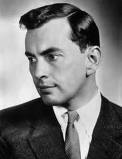
In commemoration of Dylan Thomas' 100th birthday, here is my piece on his downward spiral in New York City.
By Dylan Foley
The White Horse Tavern opened in 1880 in Manhattan to serve the longshoremen who worked the teeming docks on the Hudson River. A rough-and-ready establishment, the bar first achieved underground literary cache in the teens of the last century when the playwright Eugene O’Neill hung out there with Dorothy Day, the future Catholic activist.
The White Horse reestablished its literary bona fides in 1952 when Dylan Thomas was brought to the tavern during his second American tour by the Scottish poet Ruthven Todd. Thomas’ 18-month reign at the White Horse until his death in November 1953 paved the way for other writers drinking at the tavern. Jimmy Baldwin drank there in the early 1950s, before the publication of his first novel “Go Tell It On the Mountain” and his self-exile to Paris.
Thomas’ biographer Paul Ferris has suggested that the White Horse’s proximity to the nearby Hudson River docks reminded Thomas of his hometown of Swansea, Wales. In his book “Dylan Thomas in America: An Intimate Journal,” the poet and the director of the 92nd Street Y’s Poetry Center Malcolm Brinnin said that “the British who came to New York liked the White Horse because it resembled an English pub. Before Todd took Dylan to the Horse, I’d been trying to keep him in check, take him to places like the Blarney Stone, which wasn’t all that interesting, didn’t have a lot of people for him to talk to, but when he got to the White Horse it was all over.”
With Thomas’ exploding popularity, the bar was packed with his admirers. The White Horse “had become his favorite rendezvous,” wrote Brinnin, “and much to the delight of his proprietor, who found his business doubled by the many people--friends and mere ‘ardents’--who would assemble there at all hours in the chance that Dylan might turn up. This wave of prosperity at the White Horse was to continue until Thomas’ death.”
David Markson was a graduate student at Columbia in 1952 when he met Thomas at a reading on the Columbia campus. “Thomas did a reading, and I asked him if he wanted to go for a drink,” said Markson. “He met us at the West End Bar with some friends. We had a pleasant time. Afterwards, I asked him if I could give him a shout, and he said sure, call me at the Chelsea Hotel. When I came down with several friends, he said, ‘Let’s go to the Horse.’ I didn’t know what he was talking about, but it was the White Horse. Eventually, I began to spend time there myself.”
During his second trip to New York City, Thomas had brought along his fiery wife Caitlin, who he would sometimes bring to the White Horse. “She’d get pissed off that on one was paying attention to her,” said Markson. “One day we were at a table in the back with Thomas. Caitlin took out a cigarette. No one noticed her. She finally said, Would one of you satellites give me a light?’
“On a different night, I noticed that Caitlin had been gone from the table for a long time. I said, ‘Dylan, hasn’t she been in the ladies’ room for a long time?’ He said ‘Oh, David, she’s in the saloon across the street because she’s pissed off that she’s being ignored.’ Caitlin gave as good as she got.” Thomas asked Markson to fetch his wife. “He asked me, ‘Do me a favor, go buy her a beer and bring her back here. She’ll be less angry if you show up than if I do,’” said Markson. “Thomas was right. I found Caitlin in the nearest bar. I told her Dylan was sorry or whatever. She cursed, but she came back.”
Caitlin and Dylan Thomas had a passionate, jealous relationship with adulterous affairs on both sides. They baited each other while on tour in America in 1952, where Caitlin declared loudly at a party, “Is there not a man man enough for me in America?” She hated Thomas’ success in America and despised the girls that screamed for him as if he was a pop star. Once before he went on for a reading in New York, she said to Thomas of his poems, “Just remember, they are all dirt.”
The rift in their marriage became public in America, noted Brinnin. During a cocktail party at a wealthy admirer’s home, Caitlin and Dylan Thomas trashed the apartment. “I had witnessed one of these myself--at an evening party, given in their honor,” wrote Brinnin. “After watching their skirmishes, incredulous guests had abruptly departed from rooms littered with smashed glasses, overturned tables and broken objects d’art, leaving their hostess in a state of hysteria, as she contemplated her loss, part of which was a plaster section of the wall of her bedroom.”
The Thomas’ drinking during their 1952 stay in New York was prodigious. When traveling through Arizona on the reading tour, Thomas wrote on a postcard to a friend back in Wales that
“We were killed in action, Manhattan Island, Spring 1952,
in a gallant battle against American generosity.
An American called Double Rye shot Caitlin to death.
I was scalped by a bourbon.
Posthumous love to you and Irene.”
Despite the legions of admirers on the American tours, Thomas had to deal with crackpots. At the White Horse, a student approached Thomas, and said “I want to say to you, Fuck you, Dylan Thomas.” At a reading at Sarah Lawrence College in Bronxville on the same tour, a man told Thomas, “I’ll tell you what, Dylan Thomas, if you hadn’t written any poems, no one would have heard of you.” Thomas admitted to friends that he was unsettled by the occasional abuse.
Thomas was famous for several mistresses in England, and there were at least a few entanglements in America.
In a memoir published 30 years after Thomas’ death, Caitlin Thomas recounted a story of their ongoing mutual warfare: “Another awful evening I was with him at the White Horse Tavern when some woman came in, whispered in his ear--and he walked off with her as meekly as a lamb. I was in a quandary. I didn’t know what to do. I couldn’t go running off after him. There was nothing innocent about it (she wasn’t a journalist arranging an interview), it stank a mile off, and I went into a decompression after that. I don’t know how I got back to the Chelsea Hotel. Someone must have put me in a taxi.”
Caitlin, a striking Anglo-Irish dancer who was proud of her exceptional body, was hellbent on exacting revenge from her poet husband. According to her close friend Rose, Slivka, the wife of sculptor David Slivka, Caitlin would pick up the occasional sailor or longshoreman from the nearby docks, not far from the Chelsea.
One of the wilder stories of Caitlin Thomas’ stay in New York in 1952 involved the events at a party at the filmmaker Maya Deren’s apartment. Deren, fresh from a stay in Haiti, was showing off some Voodoo dance moves to the accompagnyment of frenetic drumming. Caitlin was the only one bold enough to challenge Deren to an impromptu aggressive dance off. Anatole Broyard witnessed the scene.
“I first saw Caitlin Thomas at a party given by Maya Deren in her apartment in Greenwich Village,” wrote Broyard in his memoir Kafka was the Rage. “I only saw the bottom half of her, her legs, thighs and cotton underpants, because she was holding her dress up over her head as if she was pulling it off, or hiding behind it like a child. She was dancing, a sort of elementary hootchy-kootch that didn’t have much to do with the fast Haitian drum music that filled the room.”
The stocky Deren faced off with Caitlin. “It was like a war or the worlds out there on the floor: the child-bearing, cottage-keeping, pub-crawling wife of the Welsh bard against a rising star of Greenwich Village,” wrote Broyard. “Caitlin relied on the immemorial argument of bump and grind, while Maya Deren, who wore trousers, danced not exactly to the tapes, but the different drummer of the American art establishment.”
Broyard found Dylan Thomas hiding from the antics of his wife in a nearby bedroom, ignoring a circle of male admirers. Broyard had his own views on Thomas’ wrecked appearance.: “[Dylan] was no longer the pretty, pouting cherub of the Augustus John painting, but a man swollen by drink, and by sorrow, perhaps, or poetry. He looked like an inflatable toy that had been overinflated.”
Deren and a young confederate tried to usher Caitlin off the dance floor. She punched the young man out, then proceeded to grab the small Voodoo statuettes that Deren had arranged on a shelf, flinging them against the far wall. Deren was horrified. “Plunging her fingers into her curls, she cried like an Ibsen heroine, She’s smashing my universe.”
Dylan takes control at this point by grabbing Caitlin’s arm, spinning her around and flinging her, with great accuracy noted Broyard, from the living room into the bedroom. At one point, Broyard is given the job of restraining Caitlin Thomas on a bed. She stops struggling, then asks Broyard, “Are you queer?” The offended Broyard says no. “She threw her arms around my neck. Then for God’s sake, man, she said, love me! Love me!” He takes her back to the Chelsea by cab and runs away when she invites him in for a drink.
At the same time as Thomas was holding court, Norman Mailer set up a Sunday writers’ salon at the White Horse with the novelist Vance Bourjaily. Word had been passed around that Mailer wanted to meet some of the writers that hung out at Bourjaily’s apartment.
Hortense Calisher was one of the writers invited to the first event, which was not a brilliant beginning. “’Norman’ wanted us to meet pn a Sunday and get some needed cafe discussion started, the bar chosen being the White Horse on Hudson Street--which is how it came to be known as a place where writers went, by the time Dylan Thomas was taken there,” wrote Calisher in a memoir she published in the early 1970s.
The locals were not impressed with the uptown writers. “The day we first go,” wrote Calisher, “in a group of about ten, of which I recall for sure only Mailer, the Bourjailys and Frederic Morton, the bar and it’s usual patrons, mostly the remainders of indigenoous Greenwich Village Irish, are no more unhandy with us--don’t we know wherther we want a glass or a stein?
“The White Horse doesn’t know yet that it is going to be a literary pub. And we had the sad sense, or I do, that stuff like this is hard going in America. At one point Mailer takes out a dollar bill, and pleads with somebody to start an argument going with him ‘on anything.’ Nobody takes him up on it...Nothing memorable having been said by anyone, we leave, unsure whether we have consecrated the place.”
The awkward salons went on for about a year before they petered out. Mailer biographer Mary V. Dearborn notes that the salons were a place where some of New York’s important writers of the moment congregated for a while. This was all eclipsed by Dylan Thomas’ powerful explosion on the New York scene. It is also pretty clear that Mailer and Thomas never met.
Dave Van Ronk, who was to become a legendary folk singer, was one of the fans who would go to the White Horse to listen to Dylan Thomas reel off the occasional bit of verse. Van Ronk later mused that Dylan Thomas writing often didn’t make sense. like the work of Van Ronk’s friend Bob Dylan.
“I used to hear Dylan Thomas at the old White Horse Tavern back in the 1950s,” wrote Van Ronk, and when he had enough to drink--which was frequently--he would recite his poetry, and my draw would drop. it was beautiful, gorgeous stuff, and he recited it marvelously. But when I would go back and look at the page, a lot of it was bullshit. Not all of it, by any means, but I would challenge anyone to explain what some of those things were about.”
When Thomas showed up in New York for his third tour in February 1953, he confessed to Brinnin that “Under Milk Wood,” his epic “play for voices” that he had promised to the Poetry Center, was unfinished. On Thomas’ first day in New York, he and Brinnin went drinking at a series of Manhattan bars, winding up at the White Horse, where they were greeted warmly.
“At the White Horse Tavern, which we reached by midafternoon, everyone along the bar turned to greet him,” wrote Brinnin. “Ernie, the rotund proprietor, sent scotch to the table and sat down with us to reminisce about memorable evenings the year before. Dylan seemed happy, more than a little excited and most of all at home. His only genuine ease, I had long before observed, was among friendly faces, known and unknown, where the only propriety was to be oneself...I put aside the lists of urgent appointments and lecture tour matters...and simply basked in Dylan’s open and infectious delight at having come back to America.”
Nights for Dylan Thomas in Greenwich Village always included barhopping--going to Julius’s for hamburgers, then the San Remo, then back to the White Horse, where Brinnin wrote, “the usual crowd awaited his entrance.”
In April, Thomas’ Collected Poems was reviewed in Time magazine. The backhanded criticism praised his poetry and pummeled the man.
“[Thomas] is a chubby, bulb-nosed little Welshman with green eyes, a generally untidy air and the finest lyrical talent of any poet under 40,” went the unsigned Time review. The article continued to rip into Thomas’ personality: “When he settles down to guzzle beer, which is most of the time, his incredible yarns tumble over each other in a wild, Welsh dithyramb in which truth and fact become hopelessly smothered in boozy invention. He borrows with no thought of returning what is lent, seldom shows up on time, and is a trial to his friends and a worry to his family.”
After the piece came out, Thomas sued Time-Life International for libel.
During his third American tour in April 1953, Thomas was introduced to Liz Reitell, the secretary of the 92nd Street YW-YMHA’s Poetry Center. Though they initially disliked each other, they became lovers. Reitell, a sophisticated ex-Army WAC who’d been divorced twice, was responsible for pulling together “Under Milk Wood” from Dylan Thomas’ last-minute changes for the world premiere of the play at the Poetry Center in New York in May 1953.
Reitell and Dylan Thomas’ affair was common knowledge at the Poetry Center. Reitell was 33-years old, a striking woman with high cheekbones. She had been a painter and a dancer. A colleague described her as a “’flap-sandal-clad, artsy-crafty type,’ very possessive of Thomas: the nurse, the guard, secretary,” who pops up when famous men need looking after. As noted by the same colleague, Reitell also took Thomas’ abuse: “The few times I saw them together, Dylan was hostile to Liz and made personal, hurtful remarks that I wouldn’t have accepted from God but she, of course, ‘understood.’”
After the success of “Under Milk Wood” in Boston and New York, Thomas spent the last nine or 10 days of his spring tour walking around the Village with Reitell and hitting the bars. Years later, Reitell described Thomas as “terribly, clinically alcoholic...There was no great muse that made Dylan drink. He drank because he was an alcoholic. He had all the devils, and some angels, too.”
Dylan Thomas returned to New York for his fatal stay on October 19, 1953. His health was devastated. Thomas plowed through New York in a drunken haze, with the exception being his spectacular reprise of “Under Milk Wood” at the 92nd Street Y.
As in his relationship with Caitlin, Thomas had added an element of emotional cruelty to his love affair with Liz Reitell. In the last weeks of Thomas’ life, Reitell and Brinnin had a heartbreaking conversation about him. “He was, Liz said, without any question, the most lovable human being she ha d ever known,” wrote Brinnin. “While she adored him, she also knew that he was destroyer--that he had an instinct for drawing to him those most capable of being annihilated by them.” Reitell admitted she was going to break up with him.
That night, when Reitell refused to go on to the White Horse with Thomas, “Dylan went to the White Horse, stayed out most of the night, and returned to his hotel with a girl ‘loaned’ to him by one of his drinking companions,” wrote Brinnin.
Thomas’ health continued to collapse. After a particularly bad hangover, he had Reitell take him to the White Horse, where he drank beer and raw eggs, which had become his only source of nutrition.
Ironically, a good source of information for Thomas’ movements in his last few weeks of life was a private detective, who was following the poet around the Village because of the Time-Life libel suit. On October 31st, four days before he drank himself into a coma, Thomas entered the White Horse drunk with two friends. At a nearby bar and grill later that night, Thomas loudly confessed to sexual impotency and said that he loved his wife, and his adulterous affairs were just substitutes for Caitlin. He also admitted to contracting gonorrhea as a teenager. At 2:20 a.m., he was “seen taking benzedrine.” As his biographer Paul Ferris notes with sympathy, it must have been a tiring night for the detective.
Liam Clancy of the original Clancy Brothers , a group that was once called “the Irish Beatles,” hung out at the White Horse five or six years after Thomas died. He recounted the myth of Dylan Thomas’ death: "The doctors told [Thomas] that even one more whiskey would do in his liver, so he set up a pyramid of thirty-six shot glasses of whiskeys on the counter of the White horse. He looked a long time at the pyramid, contemplating. The he took the top shot glass off the pile, downed it and with suicidal certainty drank glass after glass until the pyramid was demolished.”
A more authoritative account of Thomas’ death comes from Paul Ferris, who said that Thomas spent the day of November 3rd drinking, sleeping and having delusions in his room at the ratty Chelsea Hotel on 23rd. At 2 a.m. on the 4th, he told Liz Reitell that he had to go out for a drink. He came back 90 minutes later, probably going to the White Horse, and said that line that started his death legend: “I’ve had 18 straight whiskeys. I think that’s a record.” He told Reitell, “I love you, but I am alone,” then fell asleep.
During the day of November 4th, Thomas was raving in his hotel room. Reitell took him to the White Horse for what was hoped would be a restorative two pints of beer. A quack doctor who he was seeing named Feltenstein, who boasted of having “a winking needle,” gave Thomas an injection of morphine, six times the amount he was supposed to have given him. Soon after, Thomas was taken to St. Vincent’s.
After Thomas went into his coma, his poet friend Ruthven Todd, who had introduced him to the White Horse, and Stuart Thomas, a Welsh lawyer from Swansea, tracked his last movements. Todd interviewed the White Horse’s bartender, who figured by checking his stock that Thomas could have only have had six whiskeys maximum.
Caitlin Thomas was in Wales when she was notified of Thomas’ serious medical condition. She went to a local party that night, but then took the train to London to wait for a plane. Caitlin Thomas flew into New York on November 8th, swept into St. Vincent’s and demanded of Brinnin, “Is the bloody man dead or alive?” Brinnin had the thankless task of hiding Liz Reitell, who’d spent days at Thomas’ hospital bedside, out of sight from Caitlin’s rage.
Caitlin Thomas’ actions at the hospital were fit for a short Irish drama. When she spent 15 minutes alone with the comatose Dylan, she tried to smash her head through the window of his room, but was unable to do so because the glass was reinforced. She was taken away by friends, but returned to the hospital later. On the second visit, she was initially more composed. “She was wearing a striking, close-fitting black wool dress; her tawny yellow hair was loosely done up; she looked radiantly beautiful, and she had had too much to drink,” wrote Brinnin. She refused to stop lighting cigarettes near Dylan’s oxygen tent. She then pulled a crucifix off the wall and smashed it, and splintered a statue of the Virgin to bits. She assaulted Brinnin and several others who tried to comfort her. She then bit an orderly, attacked a doctor and ripped a nun’s habit. She wound up sedated and in a straight jacket. The doctors at St. Vincent’s wanted to send her to Bellevue, but after the intervention of Brinnin and others, she was sent to Rivercrest, a private psychiatric institution in Queens.
Dylan Thomas died the next day, November 9th, while a nurse was giving him a sponge bath. Brinnin and Reitell were at Dylan Thomas’ side right after he died. “When I took his feet in my hands all warmth was gone,” wrote Brinnin. “It was as if I could feel the little distance between his life and death. Liz whispered to him and kissed him on the forehead. We stood then at the foot of the bed for a very few long minutes, and did not weep or speak. Now, as always, where Dylan was, there were no tears at all.”
In August 2008, Caitlin MacNamara Thomas’ diary from the 1950s was put on the auction block for $500,000. In a diary entry a few days after his burial in Wales, Caitlin wrote, “Oh God, oh Dylan, it must be cold down there; it is cold enough on top in November: the dirtiest month of the year that killed you on the ninth vile day. If only I could take you a bowl of your bread, and milk, and salt, that you always drank at night to warm you up.”
Sources:
Broyard, Anatole, Kafka was the Rage
Calisher, Hortense, Herself: An Autobiographical Work
Ferris, Paul, Dylan Thomas: The Biography
Interview with David Markson, July 2007
Thomas, Caitlin, Double-Drink Story
Van Ronk, Dave, The Mayor of MacDougal Street
Brinin, Malcolm, Dylan Thomas in America: An Intimate Journal
The Independent (London) August 12, 2008
Time Magazine, April 6, 1953
 (Gore Vidal, bottom, and Jack Kerouac, top, though Vidal claims it was the other way around )