Showing posts with label Sea Colony. Show all posts

Wednesday, March 30, 2022

The Novelist Lee Lynch on being a Young Butch in 1960's Greenwich Village and her five-decade writing career


(Lee Lynch)

 Lee Lynch, novelist, interviewed by telephone at her home in the Pacific Northwest, January 18, 2022


In 1985, the lesbian writer Lee Lynch published her second novel The Swashbuckler, chronicling the life and loves of Frenchy Tonneau, a 21-year-old bantam-weight butch lover, breaking hearts in the lesbian bars and coffee shops of Greenwich Village.


The novel starts in 1960, where the young butch struts down Greenwich Avenue on Saturday night in her boots, pompadour, denim jacket and garrison belt. Frenchy is the cock of the walk. After a night of drinking, flirting and dancing in the Mob-owned bars, Frenchy takes the train home to the Bronx, undoes her pompadour and hides her boots, resuming her everyday life as a dour young checkout girl at the local A&P, supporting her mother, a depressed French widow.


The novel spans 12 years in Frenchy’s life. She starts an affair with a closeted femme teacher named Edie, then meets Mercedes, a sensual, traumatized single mother from Spanish Harlem. The early 1960’s are a time when there is still the danger that young lesbians could be arrested and incarcerated as juvenile delinquents. There is also a threat of anti-lesbian violence in the streets, usually directed at the butches for their male drag. The Village is changing, as are the lesbians who live and pursue romance down there. Frenchy meets Pam, a bohemian painter, who follows her lusts and seduces Frenchy, showing her that butches can take pleasure, as well as do the dishes. Despite the exploitative Mob bars and the ominous Women’s House of Detention that overshadows the lesbian world, Frenchy moves to the Village, her Jerusalem. In small steps, by the early 1970’s Frenchy is able to build a much more open lesbian life and creates a rich, intentional family, made up of a lover, a child she raises, old lovers and friends.  


(The Swashbucker, with its original 1985 cover)


Born in New York City in 1945, Lynch came down to Greenwich Village from Flushing, Queens, as a 15-year-old butch with her girlfriend Suzie. She went to the coffee shops like Pam Pams and the Campy Corner, a drugstore, hanging out with other gay kids who barely had money for coffee. Lynch soon graduated to the Mob-run lesbian bars like the Swing Rendezvous on MacDougal Street and occasionally the working-class Sea Colony on 8thAvenue.


By the time she got to college, Lynch had started publishing in The Ladder(America’s first national lesbian journal), Common Lives, Lesbian Lives and Sinister Wisdom. The legendary poet Adrienne Rich told Lynch she should turn an overly long short story into a novel and thus her debut Toothpick House was born in 1983, being published by the Naiad Press, America’s first major lesbian press, founded by her former editor at The Ladder, Barbara Grier.


Lynch crossed the American continent three times for love, going from Connecticut to Oregon, to Florida, then back to the Pacific Northwest. While working various jobs, she always continued writing, publishing novels, short-story collections and several anthologies of lesbian literature, leading to roughly 20 books. Lynch’s work concerns the lives of working-class lesbians in bars, in small towns and cities. She has documented decades of lesbian history and lives through her fiction. Two dedicated publishers— first the late Barbara Grier and then Radclyffe of Bold Strokes Books, kept publishing her. Many of her books are still in print or backed up by e-books, and she has a new collection of stories coming out in 2022 with Bold Strokes.


(Toothpick House, Lynch's 1983 debut)


In her early sixties, Lynch’s new intense romantic interest Elaine Mulligan (now her wife Elaine Lynch) convinced her to go to a Golden Crown Literary Society event in Atlanta. Golden Crown is a dynamic organization that promotes lesbian writers and literature. At this meeting and other conferences, Lynch gained new fans and hobnobbed with such prominent lesbian writers as Karin Kallmaker, Katherine V. Forrest and Lori Lake, who appreciate her work. She has also received numerous awards, including the Golden Crown Literary Society Trail Blazer award for lifetime achievement and the Ann Bannon Popular Choice Award. Lynch also received the James Duggins Mid-Career Author Award in 2010. In 2012, Lynch was awarded the Golden Crown Society’s inaugural Lee Lynch Classic Fiction Award for The Swashbuckler. 


From 1986, Lynch wrote a nationally syndicated column on American lesbian life called “The Amazon Trail,” which ran in gay and lesbian newspapers for 35 years and resulted in hundreds of columns. Lynch retired “The Amazon Trail” in 2021. Collections of the columns have been published twice, with the second time being Lynch’s An American Queer: The Amazon Trail, A Quarter Century of Queer Life in the United States(Bold Strokes Books, 2014).


I spoke with Lee Lynch by telephone at her home in the Pacific Northwest. Lynch gave me a witty and frank interview about her own youth as a young butch walking the streets of Greenwich Village and going to the Mob bars, and her five-decade literary career.


 Here is our interview:


DYLAN FOLEY: Where were you born and raised?


LEE LYNCH: I was born in Hell’s Kitchen and grew up in Flushing. I went to the local schools. My mother was Catholic, but my father, who practiced no religion, objected to bringing me up Catholic. I went to public schools, thank goodness.


DF: Were you torn between your mother’s Boston Irish Catholic side and your father’s Episcopalian family? 


LL: My father’s side was slightly wealthier. If my mother’s family was blue collar, my father’s family was whatever was next, professionals. They had things like stocks.


DF: What was your father’s work background? 


LL: During the Depression, he was in the merchant marine. Then he worked for the federal agency that later became the FAA. He worked his way up pretty high, so we could afford our $85-a-month apartment in Flushing.


DF: He was based in New York?


LL: He was based all over the country. For the 18 years I was in New York, he was based in New York, first at LaGuardia, then at what was then called Idlewild.

DF: When did you find out about the Village?


LL: At 15, I began to realize my sexual desires. To start from the beginning, my best friend Suzie, we’d been friends since aged 12, 7th grade. At aged 14, she attempted suicide, probably for the second time. She was taken to Elmhurst General, the adolescent psych ward. While there, she met a lesbian. Suzie and I were just friends. I didn’t know anything. Because my parents were from Boston, my mother was afraid of New York. They were really protective. I didn’t know the word homosexual. The boys at the school across the street would call me “butch.” I would be like “What?” 


The lesbian on the psych ward took five cops to bring her in. She was a rough and tough dyke. She tried to bring Suzie out and Suzie was telling me all this by phone. I’m finally realizing, “Oh, that’s what I feel for Suzie.” She realized the same about me.  We developed a love relationship because of the woman in the hospital. Her name was Kenny. Kenny was short for Noreen Kennedy. She’s dead, Suzie’s dead. They’re all dead. We can use their names.


Kenny told Suzie about the Village, places to go in the Village. Kenny was from a very rough background. She was rumored to have murdered another child. Where she led us was the working-class places.


(Lee Lynch in the 1980's, from her author photo from the original 1985 edition of The Swashbuckler. Photo taken by the late photographer Tee A. Corinne)


DF: So you didn’t go to places like the more middle-class Bagatelle, but the working-class Sea Colony?


LL: Exactly. I wasn’t at the Sea Colony a lot. We hung around at the Swing Rendezvous Lounge. It was on Bleecker or MacDougal, one of the big streets in the Village.


I probably didn’t go to the actual bars until I was 16. Back then, it was pretty easy to go. There were always gay kids on the street. At one point, I had a friend who was so well known at the Swing that she loaned me her ID. They let her in and I passed through on her ID.


(Swing Rendevous, 1945 drawing, MacDougal Street, now a restaurant)


DF: Did you go to the 6th Avenue coffee shop Pam Pams first?


LL: When we were first out, that was the place to go. There were always gay kids out on the street in front of Pam Pams. This was the soda fountain Pam Pams, not the bar Pam Pams. Nobody seemed to have any money. If we had enough money for a cup of coffee, we’d go in and stay until they indicated we had been too long, then we’d go out on the street. We’d mill about. The only person I remember meeting was a sailor on a layover in the city. He had heard of Pam Pams, but was looking for bars. We filled him in a bit. He went off.


The crowd at Pam Pams was probably very mixed. I remember lots of kids from the Bronx. I remember a particular boy called Gypsy. He was very short. He may have been mentally ill. He had one of those personalities. He would entertain everyone and bring people together. You watched Gypsy. You watched everybody.


Sometimes we would follow older lesbians, to see how they lived, how they walked, how they talked.


DF: The opening of The Swashbuckler is amazing. Frenchy is strutting down the street, with her diddy-bop walk. She’s tricked out with her pompadour and her black denim jacket. Were there autobiographical elements to Frenchy or did you make her from fragments of multiple people?


LL: I just made her up, possibly from many parts. Possibly that’s what I wanted to be like. I was very shy. It was from observation. In my mind, there is such a thing as an arrogant, short dyke. A short butch, I should say. She’s a prototype for that. They can be any class, any education level. You get ‘em everywhere. That was my first one.


DF: If you are diminutive, you have to be tough. She has a garrison belt, and she’s ready to fight. What was the environment at Pam Pams like? What was the Campy Corner?


LL: They were a coffee shop and a drugstore. “Campy Corner” was a drugstore. You could go in and get a cup of coffee. We were not popular, the gay kids, at the Campy Corner. It was right across the street from the House of D. They were regular places that the gay kids would go to.


(The Women's House of a Detention, a notorious hellhole on Greenwich Avenue. Torn down in the 1970's. Now a community garden. Lesbian prisoners would call down to their lovers on the street. Prisoners would also make catcalls to people walking by.)

It was 15 cents for a subway token. If you had a two-dollar allowance, which is what I had, you’d blow it up with a couple of cups of coffee and the subway.


DF: In the novel, Frenchy goes back to the Bronx and has to undo her pompadour, hide her boots, and takes apart her butch outfit to hide her nightlife from her mother. Was this your own experience going back to Flushing?


LL: Yes, basically. I didn’t have a garrison belt, but I did have a Zippo lighter. I did have to hide my cigarettes. I didn’t have a jean jacket and I wasn’t allowed to wear jeans. We lived across the court from a family that owned the local drycleaners. We would get the castoff clothes. The father would bring them home from work and his kids would wear them. I would get David Langer’s hand-me-downs. I had male clothes that I was allowed to wear. More shirts than pants. I could get as dragged out as Frenchy. I would change at school and sneak out of the back door, meet Suzie under the clock and take the subway into the city.  


DF: What do you mean by “under the clock”?


LL: Everybody knows what “under the clock” meant. It was Roosevelt Avenue and Main Street. It was a United Cigar store, and that was where the subway entrance was.


I haven’t been to Flushing in a while. I am a lover of New York. I read a lot about it.


DF: What was the Swing Rendezvous like?


LL: It was on one of the main Village streets. It was up some stairs. It was long and narrow. The bar was in the front. In the back, you walked up a couple of steps and you were on the dance floor. There were tables around. You could dance there, as long as you did not dance in any intense way. There was one waitress named Cookie. I remember her because she stole one of my girlfriends. I was newly out and I was in a different relationship. Cookie was another toughie. She or one of the other people in the bar would break up the dancers, if need be. 


(The Raid by Lee Lynch, a novel that details an impending police raid on a gay bar.)


One particular night I remember very vividly. I was sitting at a table with Suzie and this other girl, as well as some other people. There was a straight man sitting there. He tried to get her [Suzie] to go home with him. I had been drinking and I got up to take a swing at him. They kicked me out of the bar. [Chuckles.] I was so innocent. I didn’t know that such kind of stuff went on. I was trying to protect my femme.


DF: In the novel, you referred to straight men in lesbian bars as perverts.


LL: They would sit in the back room at the Sea Colony, watching the women dance.


DF: What kind of women were at the Swing Rendezvous?


LL: There wasn’t much diversity as there was at the Sea Colony. I only remember white lesbians. I wasn’t there that much. I couldn’t go down there every night. Maybe one or two people of color, mostly white.


DF: Audre Lorde, is her memoir, writes about the Sea Colony. The standards were very white. The most impressive butch would always have the most impressive femme. It would be the Hollywood standards of beauty…the girls in the poodle skirt.


LL: That’s the 1950’s, Dylan.


DF: Would it be capris or toreador pants in the 1960’s?


LL: Yes, or a tight skirt, if you are a femme.


DF: Did you have much luck getting picked up?


LL: I never did that. I’m the type who has a friend first, then something might evolve from that.


DF: Did you ever feel a threat of violence while you were out in Greenwich Village in the early 1960’s?


LL: Yes. It wasn’t just me. We were constantly aware. If a gaggle of teenage boys came by, you’d kind of scatter. You didn’t act like Frenchy for a minute or two.


On the subway, we were very defiant, Suzie and I, and probably some of the others. We’d make out on the subway, hold hands and act out, throwing in people’s face that we were lesbians.


DF: There is a great scene in The Swashbuckler, where Frenchy seduces Edie, a closeted schoolteacher, at an isolated subway stop in Queens. Edie says, “Don’t you know, we are considered juvenile delinquents?” In their defiance and with the Women’s House of D. in the background, was there the danger of being picked up by the police?


LL: Yes, definitely. We were constantly aware of that. It was not so much ignoring it. I turned 15 in 1960. It was the era of defiance against nuclear war and nuclear weapons. I was operating on that level, too.  There was some disrespect for the illegitimate laws that existed. I knew that Suzie and I could be thrown into an institution and kept there. I was not out to my family. You had to hide every bit of your existence.


DF: You have said you needed to write The Swashbuckler to deal with the stresses of leading a double life as a young lesbian. Why did you have such a visceral need to write this novel?


LL: It wasn’t just that novel, it was all of them. I was told that I had talent as a writer and I lived as a lesbian. I decided to devote my life to writing our stories. And that’s what I have done. I’ve had jobs because that’s what you need to live, but everything else I have done is about writing, writing, writing about lesbians.
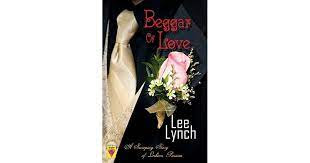

(Beggar of Love by Lee Lynch)


DF: In Beggar of Love, you address how lesbians and gays are told from an early age that they have a different moral compass than people in the larger society.


LL: You have to create your own family and you have to adapt from established values. We’re different. Back then, there was no marriage and that was part of the reason why a lot of relationships didn’t last that long, not that they definitely last with marriage.  That was the culture—you didn’t stay with one person. There was no concept of forever after for me. As I learned, though, there were women together in lifelong relationships.


Learning about lesbians in Greenwich Village did not lead me to any standard heterosexual values.


DF: Did you witness any police raids on lesbian bars?


LL: No, not in the gay bars. The police raided a straight bar in college. I was there with a boy.


DF: What college did you go to?


LL: Don’t ask. [Chuckle.] It was a mediocre college. I never learned a thing there. I thought I was the only lesbian on campus.


DF: Is it true that the legendary poet Adrienne Rich pushed you to write your first novel Toothpick House?


LL: There were two influences. One was Barbara Grier, who said she would publish my short stories, if I wrote a novel. She thought I was a lesbian John O’Hara, if you know who that is. [Editor’s note: Barbara Grier founded and ran the Naiad Press, a lesbian publishing house, for three decades.]


I had sent Toothpick House as a short story, which was like 42 pages, to Sinister Wisdom. They had already published “Oranges Out of Season.” Then Adrienne wrote back that it was too long for them, but I might have a germ of a novel.


DF: I hope you have that letter somewhere.


LL: If I do, it is at the University of Oregon.


(The Sea Colony on 8th Avenue, below 14th Street. A famous mob-owned bar, known for its working-class lesbians and their admirers. The bar was immortalized in the writing of Joan Nestle, who went there as a young femme in the late 1950's, through the 1960's. Closed in the late 1960's. The bar took up three storefronts.)


DF: Do you have any memories of the mobsters who ran the bars like the Sea Colony or the Swing Rendezvous?


LL: My own memories of them is seeing them sitting with their mistresses in the back room at the Sea Colony, watching us dance, seeing us as entertainment. I was just so angry. I probably did more obnoxious things to throw our humanity in their faces.


There was another bar, The Territory, up in Harlem, that was very much a gangster-owned and operated place. It was like entering something out of Dante’s Inferno. There was a balcony up top and that was where we would be watched from.


DF: One Of my favorite parts of The Swashbuckler is Frenchy’s seduction by Pam, a bohemian. Pam is an over-the-top artist, who wears garish colors and wants to seduce Frenchy and give her pleasure. Forgive my stereotypes, but in the early 1960’s, the butch-femme dynamic was very strict, where the butch pays for the femme and takes care of her.


LL: These are not stereotypes. This is my life. I said at the beginning that I write about history, but it goes on today. I am not strict about it, but I walk on the outside, I open doors. 


DF: Pam teaches Frenchy that she can accept pleasure and do the dishes. You wrote some beautiful sex scenes. What interested you in writing about the blurring of butch-femme dynamic?


LL: Thank you. Gosh, this is so long ago. When you are a lesbian kid or a gay male kid, you are different, you are not loved for yourself. You are loved for what they believe you are. Your parents see you as mini-me’s. The idea that someone can find you desirable, care about you, love you is hard to believe. For a butch kid, it is not a concept that occurred to me, and would not have occurred to Frenchy. I remember coming out with Suzie the first time, I felt loved. That is what I think Pam does for Frenchy, accepting love instead of putting up a wall all the time.


Pam allows Frenchy to relax enough, to recognize and acknowledge her feelings. Butches don’t have feelings.


DF: What kind of jobs were you doing while you were writing?


LL: The only job I had in New York City was the summer of my senior year, in the subscription department of the New Yorker magazine. I’ve been a subscriber since I was 17, but I must say Vanity Fair is doing a good job.


DF: Did you ever notice sex workers in the lesbian bars in New York City?


LL: I was not aware of that. When I was 18, I went off to college in Connecticut. I have not lived in New York since then.


I commuted to the bars from Connecticut for18 years. I was mostly at Bonnie and Clyde’s.


(Bonnie and Clyde's, one of the first women-owned lesbian bars in the Village, located on West 3rd Street.)


DF: Bonnie and Clyde’s was a women-owned bar. Was it an improvement over the old, dirty Mob bars?


LL: It was also a restaurant. I never had the money to eat there. It was another dingy bar, but with smaller tables. I didn’t like it.


Feminism had happened, we heard it was women owned, but I wasn’t trusting that. I felt uncomfortable in some of the same ways. It wasn’t as comfortable as the old gay bars.


DF: What were you doing in Connecticut?


LL: I was a reporter. I was an obituary writer at a newspaper. Richard Belzer, the actor, taught me how to write obituaries. [Editor’s note: Belzer is famous for cop roles on the shows “Homicide” and “Law and Order: Special Victims Unit”.] I decided to try for my masters. I went back to school and worked at the university and realized that these people couldn’t teach shit in terms of creative writing. I did have one good creative writing teacher at the unnamed university. Paul was a gay man who lived on East 10th Street. He was a wonderful teacher. He befriended me and a young man in the class. He walked me through the Village in the night and pointed out the gay men, the hustlers and those kinds of things. He was revealing a portrait of gay life that I would otherwise not have been exposed to.

(The Ladder: A Lesbian Review, where a young Lee Lynch cut her teeth as a writer.)


DF: How old were you when you started writing for The Ladder, one of America’s first lesbian journals?


LL: You had to be 21 to subscribe. I didn’t want to get them in trouble, so I didn’t subscribe until I was 21. As soon as I subscribed, I started sending them stuff.


DF: You also were publishing things in Sinister Wisdom?


LL: And Common Lives, Lesbian Lives.


DF: The artist and photographer Tee Corrine was a long-term girlfriend?


LL: No, she was only four and a half years.


DF: How did your publishing relationship with Barbara Grier evolve?


LL: She said, “Write me a novel and I will publish your short stories.” She wanted to publish a novel first. As you know, short stories don’t sell. My first book with them was 1983. Writing Toothpick House was torture.


DF: In your novels, you are very adept at writing about class in the lesbian community.


LL: I am kind of straddling two classes. That makes me more aware than someone who just grew up middle class.


(The Rainbow Gap Quartet)


DF: You have written about 20 books and you are presently working on your Rainbow Gap Quartet, about two women lovers living in Central Florida.


LL: Sounds about right on the 20 books. Some of them are anthologies.  Rainbow Gap is two books, so far.


DF: Will it be a quartet of novels?


LL: I hope to live that long. It will take place over a 50-year period, maybe 60. One of the points I am trying to make is that gay life hasn’t changed for a lot of people. They write off the Gay Pride marches. They say, “Oh, you shouldn’t do that. That’s dangerous. It’s going to work against us.” They are living their lives basically and coming up against the barriers that gay people face. I am not rewriting Pam and Frenchy over and over. For working-class dykes, many are very resistant to feminism. Some are extremely patriotic, many are veterans. You could be talking to a male logger rather than a working-class lesbian.


A friend of mine was a [military] nurse, a traditionally female occupation. She is basically my age. She wasn’t out to prove she was tough. She told me about going to the war zone in helicopters, and bringing out the injured. She didn’t sign up for that. That was horrible.


DF: What brought you to Oregon?


LL: I was in a 13-year relationship and things were not going well. I wanted to save the relationship. She wanted to move somewhere, anywhere. As it happened, Tee Corrine and her lover were at that time living in Sunny Valley, Oregon, which is in southern Oregon.


We had gone to San Francisco and met up with Barbara Grier and Donna McBride, Ann Bannon and all the literary lights. Tee Corinne invited us to see where they lived. We travelled up to Sunny Valley. Very rural. Because my partner at the time wanted to move, this was a good place because we had friends there. We moved next door, I mean rural next door, to Tee.


DF: Was it a good experience, moving to rural Oregon after being a city woman?


LL: I miss New York horribly. I collect books about New York, I read the New York Times and the New Yorker. I am very nostalgic about New York.


I’d been accepted to Hunter. I could have gone to college in New York. My parents, at the same time, had moved back to New England. I would not have had any structure. I would have become an alcoholic. I don’t have the personality to tough it out. It would have done something to me that was not positive.


DF: Has living in Oregon been conducive to writing?


LL: One of the reasons for moving out here was the idea that you could work part time because it was cheaper out here and  you could write part time. That didn’t happen. A job is a job. They want you to put your all into it. I was still just writing on weekends for a long time.


DF: What kind of work did you do?


LL: The first job in Oregon was with the State of Oregon as an employment counselor. The second job was working with handicapped preschoolers, and then at a 7-11, where I got fired for being gay. I ran convenience stores in Connecticut for five years. I finally ended up being an employment counselor for injured workers with private companies, helping people find jobs and get training. 


I had one job in Connecticut, a state job, where I could get my work done by noon and could sit in my office and write in a little notebook. That’s how I did a lot of my work.


DF: How many books did you publish with Naiad?


LL: It was probably about six books.


DF: What made you move to Florida?


LL: I was in an almost 13-year relationship in Southern Oregon. We moved over to the coast of Oregon. My girlfriend was wired differently than me. I was single for several years. Out of the blue, I started receiving correspondence from a woman in Florida. It got pretty intense. She was going to the Golden Crown Literary Society in Atlanta, Georgia. She invited me to share a room. She was a straight woman.


DF: She’s a fan of your writing?


LL: Yeah, a fan of lesbian writing. She came in though “Xena.” That became a love relationship. She had a very good job. My job was portable. We moved to Florida for what we thought was two years, but it turned out to be five before we could come back.


DF: Is this woman Elaine Mulligan Lynch?


LL: Yes, she’s my wife. We are legally married. We believe in that.


(A recent picture of Elaine Lynch and Lee Lynch, taken by the novelist Karin Kallmaker)

DF: You went Irish!


LL: Yes! Irish and Catholic, a banker and a golfer from (horrors) New Jersey. She was the last person I would have expected to go for but perfect For me. I’d always been attracted to East Coast Jewish women. When I went to Oregon, there were very few like Frenchy’s Pam. I obviously adapted.


DF: In a 2014 video interview, you said that you finally achieved major recognition for your novels in your 60’s. 


LL: That’s due to Elaine, with her bringing me to the Golden Crown. I am now visible. It was torture for me, being public, but I met writers like Lori Lake, Karin Kallmaker and KG MacGregor, some old Naiad writers, who had respect for my work and wanted me to get recognition. Now I have lots of awards.


DF: I was very impressed that your backlist of 20 books is mostly still in print or supported as e-books. 


LL: My publisher is Bold Strokes Books. I’ve been very fortunate that Radclyffe, who founded Bold Strokes, was a fan. She’s been very loyal. I have a book of classic short stories coming this year. It’s called Defiant Hearts: Classic Stories by Lee Lynch. 


DF: In earlier interviews, you’ve talked about a fist-to-mouth existence, working to support your writing. With 20 books under your belt, do you find your financial circumstances are more comfortable?


LL: No, no. It’s worse. [Chuckle.] I am a general fiction writer. There is not a big audience for that, and apparently, for lesbian writing. I live on social security.


It’s not my publisher’s fault. It is the kind of writing and the audience.


DF: I just read The Swashbuckler for a second time and got all choked up. Lydia, the young hope for the future, who is basically Frenchy’s stepdaughter, is telling Frenchy, “I think you’ve always had a lot of courage, living like you did when it was so much harder to be a lesbian.” Frenchy, like a veteran of much combat, responds, “If courage is being scared and going ahead anyway. If that’s courage, then I am courageous every day of my life, being afraid to be gay and doing it anyway.”  


LL: I have a niece 20 years younger than me. When she was young, I was reading to her. She asked what’s courage? I said, “Being scared, but going ahead and doing it anyway.” She and I, as well as my mother, were all diagnosed with a generalized anxiety and panic disorder. That revelation for me was very important and that’s how it got into the book.


DF: Was your mother ever able to read your books?


LL: Oh god, no. I was terrified she would find out I was gay. Every time I took her to a used bookstore, I cringed in the corner.


DF: You never came out to your mother?


LL: She already thought that I was going to Hell because my father didn’t want me baptized. 


DF: Was your mother a religious Catholic?


LL: She dragged me to Mass every once in a while, until I refused to go.


DF: One of the funniest things you said in your 2014 interview was that your father wanted to send you to a boarding school in Switzerland, but you wanted to stay in the Village with your girlfriend.


LL: That’s true. I don’t know if he knew what was wrong with me, being gay. Later on, in college they made me go to a therapist, the college did. There was no conversion therapy, as such, but that’s what it was. The college sent me, but my father paid for it. He may have known by that time that I was gay.


My father and his sister had gone to prep schools, Northfield Mount Hermon in Massachusetts and another one in New Hampshire. He tried to get me out of the city. Luckily, I failed the math exam.

Wednesday, February 10, 2021

The Playwright Merril Mushroom on 1950’s Butch Dating Rituals, her play “Bar Dykes,” the Psychedelic 1960’s and Raising Kids in Rural Tennessee


(Portrait of a Young Butch: Merril Mushroom in the 1960's)


By Dylan Foley


Merril Mushroom was born in 1941 in Miami Beach, Florida. As a young gay woman, she was lucky to be raised in a city with a vibrant gay and lesbian bar scene. When she was a baby butch in high school, she and two lesbian friends did a one-time male drag performance at the Onyx Room as the Tongueston Trio, doing a lip-sync rendition of “Bad Boy” by the Jive Bombers. That night, the girl Merril adored bought her drinks.


(The Onyx Room, Miami Beach, 1962)


When she went to the University of Florida in Gainesville in the late 1950’s, Florida was in the grips of the McCarthyite anti-gay Johns Commission, where both professors and college students believed to be gay were interrogated and hounded. Some professors committed suicide. Gay men and lesbians were routinely arrested at gay bars and at gay beaches.


Merril herself was questioned by authorities as a possible lesbian, dodging questions and not naming names. She changed schools to the private University of Miami, to avoid further harassment. Merril married a gay friend Jack, who was a federal civil servant. They moved to Alabama for his job during the height of the Freedom Rides, then to New York City.


Merril started living with a lover in Greenwich Village and patronizing bars like the Sea Colony and Page Three. She taught school at a Harlem elementary school for five years, then worked in progressive special-education programs.


In the mid-1960’s, Merril and another gay friend John started doing LSD together. John said he wanted to marry her, so she divorced Jack and married John in a 1960’s hippie ceremony on a friend’s property in New Jersey. The resulting film by Francis Lee from the event was narrated by the LSD guru Ram Dass. The couple decided they were going to raise children together.


Merril and John set up a hippie crafts store called Paranoia that was a free food kitchen and de facto community center for teen hippie runaways in the East Village. They also set up a gay hippie psychedelic collective. Researchers for the Neuropsychiatric Institute in Princeton would come interview them about their LSD trips.


In 1972, Merril and John decided that New York was getting too violent. They adopted their first son Jaime and hit the road in a tricked-out school bus with parquet floors, crushed-velvet curtains and a chemical toilet, looking for an intentional community that would be hospitable to their family. New Mexico was cold in the winter, so they went to the South and eventually settled in rural Tennessee, where they bought a one-hundred acre farm. Merril and Gabby (John’s fairy name) landed in what would eventually become one of the gayest areas in the South. It is now home to several dozen gay and lesbian intentional communities.


Finding decent-paying work in a rural area was hard. Merril did heavy construction, but eventually wound up teaching in the local school system as a special-education teacher for 23 years.


All the while, Merril was active in the Southern Lesbian Writers Association Conference. In 1982, she wrote the article “How to Engage in Courting Rituals 1950′s Butch Style in the Bar,” a comic take on the often strict social codes for butch-femme dating in the New York bars. Soon after, she wrote the play “Bar Dykes,” set in an unnamed 1950’s New York bar, with a wide spectrum of lesbians drinking, cruising, flirting, dating and breaking up.


In 1984, the venerable gay playwright, director and Caffe Cino veteran Bob Patrick produced “Bar Dykes” in Los Angeles. The play was also produced in Florida in 1992. 


In Tennessee, Merril could not afford magazine subscriptions, but realized that if she wrote for journals, they’d give her free copies. Over 45 years, she has had 100 publications in journals like Common Lives, Lesbian Lives and Sinister Wisdom. Recently, she guest edited a six-part series in Sinister Wisdom on a history of Southern lesbian life and culture.


Disaster struck in 2015, when the house she and Gabby built burnt down, destroying her literary archive and such things as her lesbian activism t-shirt collection. Friends rallied around Merril, sending her books and copies of her published articles that Merril had given them, helping to rebuild her archive.


After the fire, a copy of “Bar Dykes” was located. The artist Faythe Levine and Caroline Paquita, who runs the Pegacorn Press in Brooklyn, NY, republished the play in a gorgeous edition. The play was then performed in 2019 at the Flea Theatre in New York City to rave reviews. Merril has never seen the play performed live.


(Merril Mushroom's "Bar Dykes," redesigned and republished by the Pegacorn Press in 2015)


I spoke with Merril by telephone on August 25, 2020, about a life that contained enough adventures for three lifetimes. She lives in rural middle Tennessee in a brick house, and Gabby and three of their five children live across the driveway in another home. Merril was warm and open, discussing the Florida’s anti-gay Lavender Scare, the lesbian bars of 1960’s New York, her Lower East Side psychedelic gay collective and settling in rural Tennessee with her new family. We also talked about the longtail of “Bar Dykes,” and how it can still captivate an audience after 38 years.


 DYLAN FOLEY: I just read your essay “The True Tale of the Tongueston Trio” in the anthology Our Happy Hours. You did your teenage baby dyke performance at the Onyx Room, where you and two friends performed the song “Bad Boy” in male drag.


MERRIL MUSHROOM: Yeah, I had a DA and a waterfall hairdo. 


I was hanging out in the bars in Florida then. They were all Mob bars. There was Billy Lee’s. We also went to the Red Carpet, the Left Bank, the Rendezvous and the Cas-Bar. Martha Ray was a comedian and singer. Charles Pierce was an actor. He did female impersonation. He did a lot of other theater and worked in partnership with Rio Dante at the Onyx Room in Florida.


There was Jackie Jackson, who had worked the Jewel Box Review. We had the Red Carpet. There was all these big show, gay show people in Miami Beach in the 1950’s, probably from the 1940’s to the 1960’s. They probably all died of old age.


DF: I read your essay about the Johns Committee.


MM: Charlie Johns. I got out, I left the University of Florida. I went to the University of Miami, where it was safe. It was a very dangerous time because it was against the law to be gay. The police would raid the gay beach that we had. They’d raid the bars and drag people in. The butches and the drag queens had the most difficulty. Not good. [Editor’s note: see Merril’s online essay on the John’s Committee and Florida’s 1950’s harassment of lesbians and gays, “The Gay Kids and the Johns Committee,” on olderqueervoices.com]


 DF: Did you marry your gay friend Jack for safety?


MM: Well, kind of. It was safety, it was for family and for his job. My family knew I was gay. His family did not. He worked for the government and needed a front. People were doing that all the time in Florida. People married for appearance or for citizenship.  There were a lot of guys from Cuba who needed a wife.


We stayed a year in Alabama. It was a very interesting period of time. It was when the Freedom Riders were coming through. I was working with a group of Jewish women who were trying to integrate the library. It was pretty touchy. We saw the bus come through Gadsden on its way to Anniston, Alabama. It got turned over and set on fire.


DF: When you came to New York, you taught in Harlem?


MM: I did my best to be a good teacher and my social life was separate from my professional life. I had to be very closeted as a teacher or I’d be fired. After five or six years, I substituted for a year and that was where I became very interested in special education. I went back to graduate school at Bank Street College and I got a degree and teaching job with kids with autism at one of the most wonderful programs I ever worked at in my whole life. It was amazing, a marriage between the New York City public school system and the Association of Mentally Ill Children, which was a private organization that worked with kids with autism and what they called childhood schizophrenia at the time. It was a wonderful job, the class size was small. We had music therapy, art therapists and dance therapists. I had four students who were adolescent and pre-adolescent boys. We were in the Boys Club of New York facility on 10th Street there. There were two other classes and they were both taught by gay guys.


DF: You had a pretty active social life? 


MM: When I started seeing the woman I was seeing, it was pretty quick after I got to New York. She had a sublet on Jane Street, which was right in back of the Sea Colony. She then got a sublet on Jones Street. That’s where I discovered the CaffĂ© Cino, which was wonderful.


Do you know [the playwright] Bob Patrick? He’s in California. We lived in the same building on First Avenue, between 9th and 10th Streets. Bill Hayslip lived there. He and others died pretty early in the AIDS epidemic.


DF: Could you describe the Sea Colony?


MM: It was terrific. Vinny was at the door, the Mafia bouncer. He took really good care of us. It was small. It was very smoky, because you could smoke inside. The dance room in the back was packed with women. There was a bar in front. The best part of the bars in New York was that they didn’t raid them and take people out of them. The first time I went to a gay bar in New York, the police came and cleared the bar. Nobody got arrested. I was like, “Wow.”


(Sea Colony Bar, 8th Avenue, NYC, 1950's)


I remember when they started the rationing out the toilet paper. Women were going in together before that and doing things.


I hung out at the Sea Colony and the Washington Square, a downtown, little slummier bar. I went to Kooky’s for an uptown snottier bar. The woman who ran it was some gangster’s girlfriend.


DF: Kooky, with the big beehive?


MM: Yes! 


DF: Did you read Karla Jay’s memoir The Lavender Menace? She writes some funny things about Kooky’s.


MM: I used to have a Lavender Menace t-shirt, then my house burned down five years ago. Everything burned up, including my t-shirt collection, records, books, artwork. It all turned out well in the long run and things worked out as beautifully as they possibly could. I’m grateful.


(Lavender menace t-shirt)


DF: How did you accumulate information on the 1950’s butch courting rituals?


MM: I went to the bars. That was how we behaved there. We used to tease each other. We used to kid around, like with the cigarettes and shooting them [out of the pack] so many inches. We did the roles and the butch rituals. We would practice our postures and behaviors and criticize each other. There was a lot of theater about it.


DF: Every butch seems to have a different style. How did the Merril Mushroom of 1962 develop her style?


MM: Guilt by association, I guess. You hang out with people and you do what they do. You act the way they act, just like anybody does with the group that they are part of.


(Scenes from the 2019 production of "Bar Dykes")


DF: In your memory, do any of the women of the Sea Colony stand out?


MM: Everyone, I wanted to sleep with everyone one of them. They were beautiful, wonderful women. One of the things I observed was in “Bar Dykes” when Rusty says, “Does anyone here want to dance?” That was my friend Vicki and Little Lynn. Vicki went over to the table and had an eye on Little Lynn. Vicki said, “Does anyone here want to dance?” Little Lynn said, “What do you mean ‘anyone’?” Through the decades, I kept that image and it found its way into the play.


DF: You used to drink at the bar Page Three?


MM: I only went to Page Three a few times and I usually went with Joan Nestle, and it was a big thing going into Page Three with Joan because she is so gorgeous.


DF: Did you ever encounter bar raids, where the patrons were warned by a flashing red light that a police raid was coming?


MM: I never got caught in a raid in New York. In Florida, the  lights would go on and then the bartender would make everybody stop dancing. That would be before 1962. I came to New York in ’63. I moved up when Jack moved up.


DF: I read some of your 1960’s biography in the Rebels, Rubyfruit and Rhinestones by James Thomas Sears. It seemed like Jack was a bit of a square.


MM: Jack was a good Jewish boy, the kind a good Jewish girl would want to bring home to Mama. He was conventional and very square.


Our friend John had moved up to New York. We all knew each other in college. John used to go out for appearances with a girl I was living with. Gabby is John’s fairy name.


Jack came home one day and said very disapprovingly, “I just saw Johnny Harris and he’s fallen in with people who smoke pot. He’s thinking of trying it himself.”


I thought, I should call him I called him up and I said, “I’ve heard this and that about you. I’ve been a pothead all my life.” We got together. We got friendly. We had a nice tight group of hippie-friendly queer people. We were all gay, and little by little, people came in who weren’t gay, but that was okay. [Editor’s note: Merril divorced Jack and married John.]


I was turned on to LSD and I couldn’t wait to turn on John and my friends. That’s how we ended up in a social-spiritual, everyday kind of relationship. We were talking about leaving the city, this hippy group I was running around with. 


We had a store, Paranoia, where we sold crafts, Gabby, myself and my best friend. We happened on this apartment on 10th Street between First and Second Avenues. A fellow we knew was giving it up. We leased it and turned it into a store where we sold handmade crafts made by people in the neighborhood in one of the rooms. We had a free kitchen where people could come by and eat in another room, then we had a Day-Glo carousel room. We had a free-clothing giveaway. It was kind of like a community services center and store at the same time. This was ’67. It was the Flower Summer.


We worked with the runaways…we told them, “Call your mother, what’s going on and where can we get help?” It was kind of like semi-social work.


We worked with draft dodgers. We would coach them on how you get out of the draft by saying you were gay. You do it legitimately, even if you are not gay. You don’t go in wearing feathers. Say you want to see a psychologist. Say you are a homosexual and it will be really bad because you are gay and there would be all these men and all these temptations. They would get a 4-F.


DF: Could you tell me about getting your first child Jaime? And did you stick to the original plan to adopt five kids total?


MM: My mother talked me into getting married. We wanted to adopt as single parents, but my mother told me it would be very difficult. If we got legally married, it wouldn’t take anything away from what we believed in life.


After we did the home study with the agency, the social worker just handed Jaime to us. We didn’t have anything. Not a bottle, not diaper. We adopted four more kids. The kids we had all had mental-health issues. The last two that came to us from foster care were older and took all of our energy away. We didn’t have any juice left for any more kids.


DF: You and Gabby eventually went on the road?


MM: Did you come across my piece on the First International Psychedelic Exposition? That’s why I was telling you about Paranoia…this fellow wanted to put on the First international Psychedelic Exposition. He got the Forest Hills Country Club to support it. He got all these arts-and-crafts people and storeowners from the East Village to set up a “hippie village” for the tourists to come and gawk at and buy our products. We camped out the whole week at the country club. We had rooms and spaces, and we set up whatever psychedelic spaces we wanted to set up for a tourist attraction. People would come through, go through the stores. At 5 o’clock, we would close down and have communal meals, campfires and use the sauna and have a hippie community. It was a lot of fun.


We got to talking behind whatever substances we were using, how the city was getting ugly and how “hippie” was becoming a fashion and not a statement anymore. What was the expression? We used to be a movement, now we are a market. People were talking about going to the country and building a community in the country, an intentional community and buying land. 


It sounded very appealing. We knew some people who had moved to the Hog Farm, Hugh Romney/Wavy Gravy’s place. Maybe we would go there.


When the time came, we bought a school bus from Joey Skaggs. He used to put up installations in Tomkins Square Park. He had this school bus that he’d furnished with parquet wood floors, crushed-velvet curtains, a big water tank, a chemical toilet and an ice box. It was perfect to live in. We bought it from him and went on the road, looking for this pie in the sky, beautiful piece of land to buy. We got to New Mexico and didn’t like it. It was too dry and we didn’t want the hard winters like they have in the area. Albuquerque was too dry. It wasn’t green, it wasn’t beautiful like our eastern areas. We both grew up in Florida. We didn’t want to live in the southeast because we had a black baby. We were remembering the South of the ‘50’s, where we didn’t think that was safe. 


We stopped in Georgia on our way through, and stayed with Julia Penelope (a lesbian linguist whose been dead for five or six years). She was a very prolific writer. She told us that the South had changed. She was a teacher at the University of Georgia at Athens. Now it was the 1970’s. Things were different. Sure enough, they were. When we didn’t like it anywhere else, we were forced back to the southeast. Everything fell into place.


DF: How did you wind up in the Dowelltown area?


MM: We went to Knoxville because we knew lesbians there. We figured we’d look into the Smokies and we’d look into the Ozarks, but we’d thought we’d be too isolated there. My cousin had looked around. She was sitting in the living room, reading an old Mother Earth Magazine. There was a letter in the magazine from someone who lived there [near Dowelltown]. They were “back to the land” people and they were interested in all kinds of things we were interested in. They were inviting people to check out the area. We got together with them over time. One day, she called and said that there was a piece of land for sale. It was almost 100 acres and it was straight up and down. It cost $20,000 and had two houses on it, two old barns, and water—a creek and springs. It was beautiful.


DF: Did you work the land and have livestock?


MM: We had a garden. There was nothing we could farm to make a living. We wanted to raise kids. We had a couple of horses from time to time, but never for very long. We had cats and dogs and kids.


The kids practically lived outside. We didn’t have a lot of money, they didn’t have a lot of toys. We didn’t have a TV. The kids made do with what they could pick up off the ground. They were outside all day long. It was wonderful. They loved it and never asked for more.


Gabby worked for a little bit at the state mental hospital as a tech. He got minimum wage and it was 60 miles away. It was costing him as much to go to work as he made.


I made a friend who worked at the TVA [Tennessee Valley Authority]. They were building a nuclear power plant in Tennessee, which was supposed to be the world’s largest nuclear plant. I got a job doing construction work. I worked there for a couple of years in the 1970’s. My god, what a trip. It was mostly Bubbas, boys and hardly any women.


In Knoxville, I worked at a facility for severely handicapped kids. At the time, the school system was not mandated to take kids with disabilities. I worked there for a while and had a really great program for babies. One was a rubella baby, who was deaf and blind. When I ran out of things to do with him, I called the state school for the blind and they sent me a consultant who came in and gave me some tips on what to do with him. She fell in love with my program. It was full of these little babies and all we did was play all day, but it was focused on development. When she heard I was moving to near Dowelltown, she said there was another rubella baby nearby. Would I do volunteer work? I said “sure.” I worked with the baby, then I started doing construction work. She turned three, so the local school system had to educate her. They were looking for someone to work with her. Meanwhile, I could not get a job in the local school system, even though I was highly credentialed and experienced. I didn’t know the right people. I wasn’t somebody’s daughter or wife. This was a very small town. But the parents of the rubella baby wanted me to work with her. I told them to talk to the special ed director, for I couldn’t get the job otherwise. They did and that was how I got into the local school system.


I ended up doing an integrated preschool program with kids with disabilities, kids without disabilities, kids from different ages, from five months up to six years. There were no regulations. We could do what the parents wanted, do what was right for the kids without the state, who didn’t know what they were doing, breathing down our necks. I taught for 23 years.


DF: How did your original article on 1950’s butch dating rituals first develop?


MM: We were talking about it and kind of joking with each other, me and some friends, about what we did. We thought it would make a good story. I was writing for Common Lives/Lesbian Lives magazine. We didn’t have any money and we couldn’t afford subscriptions to magazines. I found out if I wrote for them, I’d get free copies. So that is what I did. I wrote it up and I got my free copies. I did a lot of writing for Common Lives. I loved that magazine.


(Issues of Common Lives/Lesbian Lives)


DF: What inspired you to write up the courting rituals as your play “Bar Dykes”?


MM: Sometimes we dramatized the story at the Southern Lesbian Writers Association Conference. Somebody would read it, and there would be a butch and a femme and a bartender, who would mime to the reading. Fun.


I don’t remember what motivated me to write a whole play about it. I had written a play called “Quad” when I lived in New York and they did it at the old La Mama.


I was hanging out at the CaffĂ© Cino back then and part of our really tight psychedelic group were theater people folks—Daniel Landau, Denny Leone, friends of Bob Patrick and people that hung out at the Cino and La Mama, who all passed really early. I wanted to give it playwrighting a try again. It would be fun to write plays.


DF: “Bar Dykes” was performed twice in the ‘80’s and ‘90’s. Most recently, the play was performed in 2019 by the gay and lesbian theatre producing company TOSOS at the Flea Theatre in New York City. Have you ever seen the play performed live?


(Looking for sex and romance in Merril Mushroom's fictional bar in "Bar Dykes")


MM: No, no. I certainly have not. They wanted me to come to New York, but I didn’t want to go to New York, so I didn’t go. I don’t fly. I haven’t flown since Lily Tomlin was in New York, and that was 40 years ago. I don’t like to leave home. I really like where I live, I really like what I do. I’ve been to New York. I’ve lived there. I don’t need to do it again.


DF: Does the area around Dowelltown have other intentional communities?


MM: Oh my god, this is one of the biggest queer areas in the universe, where I live now. 


The biggest fairy sanctuary started out in the 1970’s as an anarchist collective and then the anarchists moved off and one of the guys left came out. He wanted more fairies to come. He put out the word, and fairies flocked to the area from all over the world. It’s been established as a wonderful collective since then. They have twice-a-year gathering.


I’d say there are two dozen or more small collective groups, mostly gay, some gay and lesbian. They all identify as queer now.


DF: As a veteran of the 1950’s, 1960’s butch-femme culture, how would describe gay culture now?


MM: First, these kids are much younger. Most of them identify as queer. There are lots of trans kids. There are a lot of non-gender specific kids here. Some of the female-type people are beginning to use the word lesbian again. It had become a real “don’t say it” word. “Don’t identify as a lesbian or feminist. That’s poison. That’s femi-Nazi.” Most of the people here do anti-racism work. There are lot of political activists, back-to-the-land environmentalists, and gay/queer activists.


They don’t use the word gay so much as they used to, but I think it is coming back.


DF: Your house burned down five years ago. Did you rebuild it?


MM: The house we built was really too rough for us now that Gabby and I are old. It was great when we were 35, but not so great when we were 75. The people who told me about the land to begin with told me about a house two miles away. This old guy built the place as a family compound. There’s a brick house. Next to the brick house, across the driveway, is a double-wide trailer that has been so built on that it looks like house.


Jaime used to go hunting with the old man who lived in the trailer 40 years ago. We wound up buying both places. Gabby and the boys live in one place and I live by myself in the other place.


DF: In the fire, you lost your personal papers and writings?


MM: I lost almost 100 publications. What I have now are things I had given to people who returned them to me.


DF: Do the kids live nearby?


MM: My daughter lives in Nashville. She’s the only one capable of independent living. The boys are all kind of marginal. They lived with friends for a while, they lived at home. Now they live with Gabby in the trailer. Two live with Gabby and one lives in a camper in the back.


Two months ago, I became a great-grandmother. My grandson has a new baby girl. He isn’t together with the mother, but they are co-parenting. He’s devoted to his daughter and paying support. He’s getting his life together. He’s 23 and wants to be a rapper.


It is amazing to have my great-granddaughter on my lap. I am really good with babies. I teach her parents how to settle her down, to stop her from crying. I ran programs with babies for years. 


DF: Were the butch rituals you write about a safe way of lesbians identifying each other in the larger society?


MM: It would probably be an unsafe way of identifying ourselves. The men would say, “You want to be a man? Let’s see if you can fight like a man.”


It was more like a group kind of behavior. “You’re going to be a butch, you are going to act like a butch.” In terms of the butch-femme thing, if you weren’t sure, you could always ask. “Are you butch or are you femme?” Sometimes it is, “I’m a butch, but I’ll be femme for you."


DF: In your writer statements, you write, “I’m still the butch.”


MM: That’s true.


DF: How has your own dating experience been in Tennessee?


MM: Really good. I’ve been pretty active. I’d go to Knoxville, Nashville and even Ashville. I’d also go to the Southern Lesbian Writers Association Conference and I’ve been to Ann Arbor for conferences. I dated Mary for 12 or 14 years. She is a revolutionary social worker. She had an affair, so I guess that opened up the relationship. I started dating Carole, who had taught math, then had three kids and came out. She went back to school and became a business professor. We’ve been together for 30 years. Mary would go to conferences around the country people would say to her, “You’re from Tennessee? Do you know Merril and Carole?” This happened like eight times. Mary didn’t like that.


Carole wound up teaching at Bowling Green in Huntsville. Mary was there, as well. Their offices were around the corner from each other in the same building. Carole and I wound up having a long-distance relationship.


Carole is 80. She fell a second time, so her kids said she couldn’t live alone. She moved into an assisted-living facility, right before they shut everything down for the pandemic.


DF: Do you find that there are different dating rituals in the LGBT community in your area?


MM: You know, I don’t know if I understand them very well. I see trans men going with trans men, trans women going with trans women. I have stopped trying to figure it out, because that’s what they do.


DF: Are you working on any projects now?


(Issues of Sinister Wisdom. The Landykes issues was edited by Merril)


MM: I do want to tell you what I am doing now. I’ve been working for almost 10 years with a group called the Southern Lesbian Feminist Activist Herstory Project.  What it is is a group of us from the writers’ conference were bent out of shape because all the feminist and lesbian feminist herstory that’s available only talks about New York and California as the only places where anything ever happened. And the southeast gets a very bad rap for being racist, with ignorant, helpless women. In fact, there has been a huge amount of political activism and lesbian feminist activism happening from the mid-1960’s to the turn of the century. We have been documenting this activism through interviews and memorabilia, and anything we could possibly find. We’ve amassed a huge amount of information on women who identified as lesbian feminist activists, what they did. All of our material is archived at Duke University, at the Sally Bingham Collection. Our project has done five special issues of Sinister Wisdom magazine. We have one on herstory, one on landykes, one on culture and the arts. We have one issue on publishing and bookstores. We have one on hotspots and we are about to finish up our sixth issue, which is lesbian spirituality, rituals and politics. We are saying, “Here we are and we’ve been here all along. Look at what Southern lesbian feminist women have done in the South."


DF: When you were younger, did you read the lesbian novels of Ann Bannon and other writers?


MM: I had all her books. We all sucked them down. We all did.  One of the biggest regrets of my life was when I was living in New York, I was cleaning my apartment out. I had a box with 35 or 40 lesbian paperbacks from the ‘50’s and ‘60’s and I put them out on the street for someone else to take them, if they wanted them. I hope whoever got them truly appreciated them.